Tel: +86-18929108896 Email: solomon@sum-ho.com
- All
- Product Name
- Product Keyword
- Product Model
- Product Summary
- Product Description
- Multi Field Search


Views: 0 Author: Site Editor Publish Time: 2026-08-25 Origin: Site


Modern vehicles operate in remarkably harsh environments every single day. Automotive components face continuous exposure to aggressive road brine, extreme thermal cycling, and harsh under-hood chemicals. These extreme daily operating conditions dramatically accelerate material degradation across vital mechanical systems.
Corrosion directly impacts your business by introducing severe tangible risks. Premature component failure leads to sudden loss of vehicle function, skyrocketing warranty claims, and significant safety liabilities. Brand reputation suffers long-term damage when these critical links fail unexpectedly in the field.
We created this guide to provide a clear, engineering-aligned framework for evaluating these components. You will learn how to specify materials balancing rust defense against tensile strength and flexibility. We will explore everything from core alloy choices to advanced polymer jackets and internal lubrication strategies.
Understanding component degradation requires a close look at environmental triggers. Chlorides derived from winter road salts act as highly aggressive electrolytes. They lower the freezing point of water while accelerating chemical oxidation on exposed metal surfaces. Moisture routinely penetrates outer housings through microscopic cracks. Capillary action then draws this moisture deeper into the assembly. Furthermore, automotive fluids degrade surrounding protective elements. Engine oil, transmission fluid, and hygroscopic brake fluids often cause standard plastics to swell and crack over time.
Different types of corrosion attack these assemblies simultaneously. Galvanic corrosion represents a massive threat. It occurs when two dissimilar metals interact within the same assembly. If manufacturers pair carbon steel fittings alongside stainless wire cores incorrectly, the resulting galvanic cell destroys the connection rapidly. Pitting corrosion poses another unique danger. It attacks highly stressed areas in oxygen-starved environments. This process creates microscopic cavities leading to rapid structural decay beneath an otherwise normal-looking surface.
Failure rarely happens overnight. Symptom progression follows a distinct and measurable curve. The process begins quietly in the initial stages. Drivers typically notice slight friction increases or a spongy pedal feel. Binding occurs next as internal rust expands and thickens. The oxidized material creates enormous drag against the inner polymer liner. Finally, ultimate tensile snapping happens under peak load. Early mitigation remains absolutely critical. You must protect safety-critical components like a reliable Automotive Brake Cable from ever reaching this catastrophic endpoint.
Engineers must recognize these failure mechanics early in the design phase. By understanding how moisture and chlorides breach primary defenses, we can build redundant protection systems. We stop degradation long before it compromises vehicle safety.
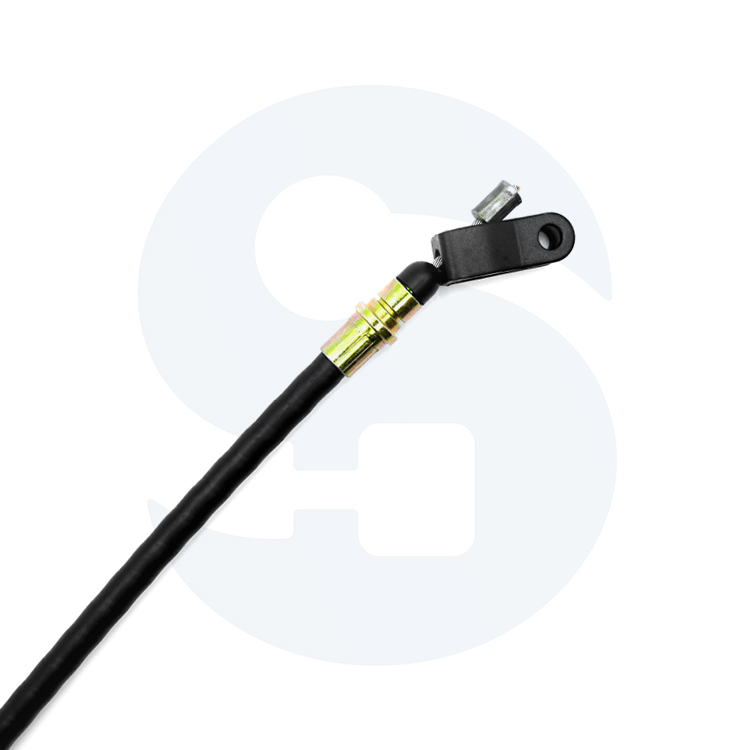
Selecting the correct core alloy establishes your foundational defense line. High-carbon galvanized steel relies entirely on a sacrificial mechanism. The zinc coating corrodes preferentially to protect the underlying steel core. It oxidizes into a harmless white powder, sparing the structural iron. This material suits applications facing moderate environmental exposure. It relies heavily on thick outer polymer casings for prolonged field survival.
Conversely, a premium Stainless Steel Automotive Cable offers vastly superior inherent protection. Its chromium content creates an active, self-healing oxide layer. This invisible shield prevents surface rusting even after minor abrasions. Industry standards typically utilize Grade 304 as a dependable baseline. Grade 304 provides an excellent balance of raw strength and rust prevention. Grade 316 contains added molybdenum. This critical addition delivers maximum resistance against severe chloride and salt exposure. Engineers reserve Grade 316 for premium models or extreme heavy-duty commercial applications.
Advanced polymer coatings and liners provide secondary physical barriers. Outer jackets alone cannot guarantee long-term performance. PTFE (Teflon) and POM (Delrin) serve primarily as inner friction liners. They eliminate metal-on-metal scraping entirely. They also actively repel creeping moisture. Polyethylene (HDPE) and Nylon act as the rugged primary physical barrier on the outside. They stop external fluid and particulate intrusion before anything reaches the metal layers.
Combining precise metallurgy and advanced polymer science yields remarkable results. Specifying these combined elements appropriately creates a truly reliable, long-lasting corrosion resistant automotive control cable.
Material Comparison Chart
| Alloy Type | Corrosion Resistance | Flexibility Profile | Best Use Case |
|---|---|---|---|
| High-Carbon Galvanized | Moderate (Sacrificial) | High (Depends on stranding) | Protected interior routing |
| Grade 304 Stainless | High (Self-healing) | Medium | Standard automotive baseline |
| Grade 316 Stainless | Maximum (Molybdenum added) | Medium-Low | Severe underbody exposure |
Material choices directly impact dynamic mechanical behavior. Tensile strength and flexibility require careful, deliberate balancing. The internal stranding configuration dictates overall stiffness. A 1x19 construction feels extremely rigid but offers immense straight-line breaking strength. A 7x19 configuration bends easily around complex routing paths. However, the 7x19 design exposes far more surface area to potential oxidative attack.
Stainless steel exhibits unique fatigue characteristics under repeated tight-radius bending. It behaves quite differently compared to standard high-carbon steel. Stainless alloys work-harden faster. Repeated bending around overly small pulleys causes early fatigue micro-fractures. You must carefully match the alloy flexibility to the intended vehicle routing geometry. Always calculate the proper sheave-to-rope diameter ratios during the initial CAD design phase.
Engineers consistently face an over-specification risk. Not every mechanical latch requires marine-grade 316 stainless. You should align the material grade directly to actual component criticality. Hood release mechanisms tolerate simpler materials well. Safety-critical braking networks demand premium, highly stable alloys.
Evaluate your components using this structured priority list to avoid over-engineering:
Even premium alloys benefit immensely from external defense mechanisms. Moisture displacement lubricants provide active, dynamic protection. Specialized internal greases maintain chemical stability across extreme temperature fluctuations. They coat individual wire strands completely. This action forms a self-healing barrier against internal condensation. Modern lithium-complex greases resist water washout exceptionally well. They ensure the inner housing remains hydrophobic throughout the vehicle lifespan.
End-fitting integrity dictates the survival of the whole assembly. Decay almost always starts right at the connection points. You must use compatible materials for crimps, swages, and connectors. Mismatched materials accelerate galvanic decay rapidly. Poor swaging processes create micro-fractures in zinc coatings. These fractures expose bare steel instantly. Zinc-nickel plating on end-fittings serves as a modern, reliable defense against this specific decay.
Boots and seals complete the final defense perimeter. Protective components utilize EPDM or advanced silicone rubber. These flexible materials seal the vulnerable cable ends completely. They block direct fluid spray and stop incoming road debris.
Implement these best practices for secondary defense assembly:
You need a highly structured approach for purchasing these vital components. Begin by defining the precise operating environment. Assess your geographic target markets accurately. Vehicles sold in heavy winter road salt regions require specialized chemical protection. Consider the routing locations carefully. Underbody routing faces direct, continuous spray from road debris. Interior routing remains relatively shielded but faces HVAC condensation cycles.
Always demand rigorous testing and compliance validation from your suppliers. Look for manufacturers validating their materials using standard accelerated weathering protocols. ASTM B117 Salt Spray Testing provides a dependable industry baseline. It exposes components to continuous saline mist for hundreds of hours. Cyclic temperature testing ensures outer polymers will not crack during severe freezing conditions. We require documentation proving components pass these tests without showing red rust or compromised tensile strength.
Supplier vetting ensures consistent, reliable production quality. Ask potential manufacturing partners key operational questions. Evaluate their extrusion capabilities and stranding precision closely. Uneven polymer jackets create sudden weak spots. Request their quality control documentation upfront. IATF 16949 (formerly ISO/TS 16949) certification remains a strict, non-negotiable standard for serious automotive suppliers. Partnering with certified manufacturers mitigates long-term product liability risks significantly.
A highly durable mechanical control system requires holistic engineering. You must pair the right core alloy with targeted outer coatings. Adding proper frictionless liners and precise rubber end-seals creates a comprehensive defense system. Overlooking any single element compromises the entire assembly. Early failures damage your brand and invite unwanted safety liabilities.
Review your upcoming vehicle platforms and mechanical systems today. Request a thorough technical consultation from your trusted manufacturing partners. Ask for specific material samples for hands-on internal review. Demand comprehensive environmental testing data before finalizing your engineering designs. Taking these proactive steps guarantees long-term field performance and passenger safety.
A: Stainless steel excels in rust prevention but is not universally mandatory. You must evaluate specific flexibility needs and component criticality. Galvanized steel serves perfectly well for protected, interior applications. However, stainless remains the strictly superior, necessary choice for exposed, safety-critical mechanisms demanding maximum operational reliability.
A: Specialized internal lubricants create a permanent hydrophobic barrier inside the housing. They actively repel intruding moisture away from the metal strands. This chemical barrier reduces internal friction dramatically. It prevents the localized rust expansion that causes premature binding and eventual tensile failure.
A: Engineers rely heavily on the ASTM B117 salt fog test. It exposes components to a continuous, highly corrosive saline mist inside a controlled chamber. High benchmark hours without showing red rust indicate reliable real-world durability. It effectively validates the combined strength of core materials and protective outer jackets.
