Tel: +86-18929108896 Email: solomon@sum-ho.com
- All
- Product Name
- Product Keyword
- Product Model
- Product Summary
- Product Description
- Multi Field Search


Views: 0 Author: Site Editor Publish Time: 2026-09-06 Origin: Site


Securing the optimal mechanical link between the gas pedal and the engine represents a critical moment in vehicle maintenance. A poorly specified throttle cable leads to pedal binding, limited throttle body opening, or catastrophic sticking at high speeds. Many mechanics and fleet managers eventually move past basic engine diagnostics. Now you must finalize procurement for complex engine swaps, routine fleet maintenance, or replacing completely obsolete OEM parts. Relying on guesswork during this stage wastes valuable time. It also introduces severe safety hazards on the road.
We designed this comprehensive article to guide your next critical purchase. You will discover a strict evaluation framework for selecting standard or bespoke control cables. We cover everything from precise mechanical tolerances to modern material grades and vital safety requirements. You will learn how to evaluate supplier testing protocols and avoid common installation failures. This ensures your final selection delivers flawless pedal response.
Every internal combustion engine requires precise mechanical actuation to function safely. Overlooking vital automotive throttle cable specifications brings severe consequences. The cost of imprecision directly affects vehicle drivability.
Incorrect specifications often result in restricted engine performance. If the cable stroke runs too short, the mechanism cannot fully open. This prevents the engine from reaching Wide Open Throttle (WOT). Your vehicle will suffer from sluggish acceleration and reduced power. Conversely, a housing cut too long creates dangerous idle situations. The inner wire remains under permanent tension. This prevents the butterfly valve from closing completely. You will experience unsafe, high-RPM idling.
To avoid these failures, you must understand core measurement dimensions. Suppliers require exact numbers to guarantee proper fitment. Record the following three figures meticulously:
Beyond length, end fitting configurations demand equal attention. These terminations connect the wire to the pedal and engine linkages. Standard termination points include ball joints, barrel ends, clevis pins, and threaded rods. You must match them exactly to your specific hardware. Mismatching a clevis pin to a ball stud causes severe binding. It heavily increases the risk of the cable detaching while driving.
Cable construction directly dictates longevity and daily performance. The inner wire serves as the primary load-bearing element. Manufacturers typically offer standard galvanized steel for budget applications. Galvanized steel provides basic utility for standard passenger cars. However, it remains highly prone to rust over time. The protective zinc coating wears off from internal friction. Once corrosion begins, galvanized strands frequently fray and snap.
Braided stainless steel delivers a far superior alternative. Stainless steel alloys provide significantly higher tensile strength. You also gain excellent natural corrosion resistance. A stainless inner wire withstands millions of pedal cycles without breaking.
Liner technologies play an equally critical role in preventing internal binding. Modern automotive applications demand low-friction materials inside the conduit. Teflon (PTFE) or similar self-lubricating plastics serve as the industry standard. A PTFE liner creates an incredibly smooth operating channel. You achieve crisp pedal return instantly. This modern technology eliminates the need for external grease. Traditional liquid lubrication attracts abrasive dust. Dust eventually binds the inner core and destroys the cable.
Outer jacket resilience protects the entire assembly from engine bay hazards. You must assess external sheathing options based on environmental threats. Standard PVC jackets work well for basic commuting vehicles. However, exhaust manifolds quickly melt standard PVC. Braided stainless steel sheathing offers exceptional impact and abrasion protection. For extreme high-heat zones, manufacturers apply heat-resistant silicone over the jacket. Silicone easily withstands extreme radiant temperatures generated by turbochargers.
The following chart illustrates the performance differences between common materials.
| Component Type | Standard Material | Premium Upgrade | Primary Benefit of Upgrade |
|---|---|---|---|
| Inner Wire | Galvanized Steel | Braided Stainless Steel | Eliminates rust and prevents fraying under heavy loads. |
| Conduit Liner | Nylon / Bare Metal | PTFE (Teflon) | Provides self-lubrication and smooth pedal return. |
| Outer Jacket | Standard PVC | Silicone or Braided Steel | Resists high exhaust heat and engine bay chemicals. |
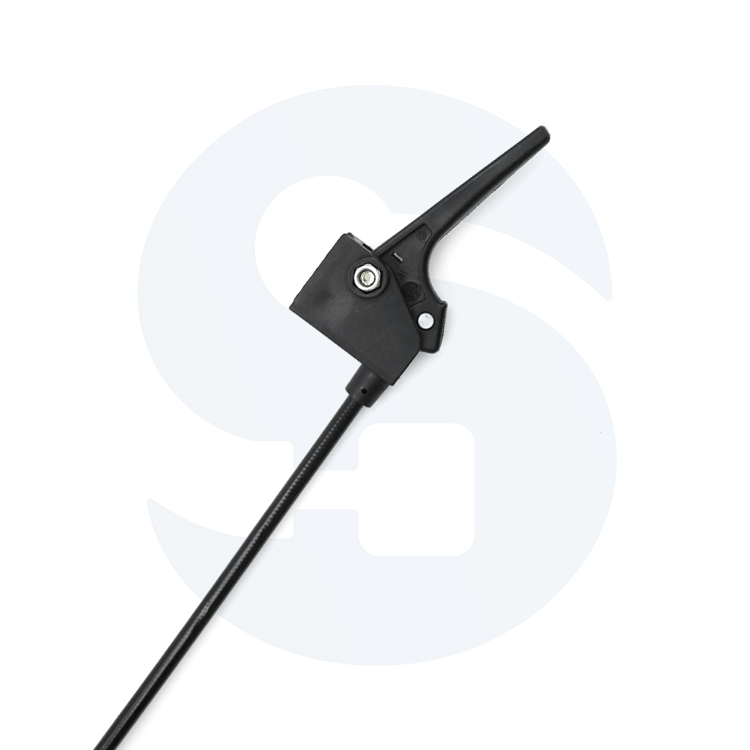
Deciding between factory replacements and bespoke manufacturing requires careful application analysis. Exact-fit standard aftermarket cables are optimal for unmodified vehicles. You should choose standard OEM parts for everyday commuters. Standard fleet replacements also benefit from predictable, factory-designed routing. These pre-measured cables snap directly into existing firewall brackets.
However, specialized automotive projects demand tailored engineering. Finding a specialized Automotive Throttle CableCustom Throttle Cable solution often solves complex geometry problems. You must identify the primary indicators for custom manufacturing.
You must avoid dangerous assumptions during the procurement process. "Universal fit" kits often appear highly convenient. Retailers sell these extra-long cables for you to cut manually. We strongly warn against using them for critical applications. They require crude manual cutting and set-screw crimping. Improper termination by an end-user leads to immediate fraying. A loose set-screw causes total throttle failure on the highway. Always order a factory-crimped cable built to your exact measurements.
Even the highest quality parts fail if installed incorrectly. Routing physics dictates overall pedal response. You must understand bend radius limitations to ensure smooth operation. Too tight a bend drastically increases internal friction. The inner wire scrapes heavily against the housing wall. This friction causes accelerated wear and uncomfortably delayed throttle response. You must maintain sweeping, gradual curves throughout the engine bay. The general engineering rule demands a minimum bend radius of ten times the cable diameter.
Environmental hazard mitigation prevents premature mechanical failure. The modern engine bay presents a highly hostile operating environment. You must evaluate specific heat shielding requirements during routing. Turbochargers and exhaust headers generate intense radiant heat. Direct heat exposure melts liners and fuses the wire to the jacket. Use thermal sleeving where close clearances are unavoidable.
Moisture ingress presents another significant threat. Unsealed ferrules allow water to enter the conduit. This moisture freezes during winter, locking the gas pedal entirely. Chemical resistance keeps engine oil and leaking coolant from degrading the polymer jacket. Ensure your routing path avoids major fluid lines.
Mounting and tensioning errors ruin perfectly good cables. Many mechanics fail to secure the outer housing properly. An unsecured jacket flexes and moves under acceleration. This movement directly alters the effective stroke length. The gas pedal might hit the floor before the throttle body opens fully. Always use rigid, high-quality clamps. Verify structural tension at both idle and WOT before test-driving the vehicle.
Sourcing reliable components requires a strict vendor evaluation process. You must scrutinize the manufacturer's quality assurance protocols. Reputable suppliers happily share their engineering data. Demand documented pull strength tests before placing bulk orders. These tensile tests prove the crimped ends will not detach under heavy foot pressure. Ask the vendor about their cycle testing procedures. High-quality manufacturers simulate millions of pedal depressions in a laboratory. This rigorous testing guarantees long-term highway reliability.
Evaluate their customization capabilities carefully before initiating a complex build. Ordering bespoke solutions requires crystal clear communication. You should ask specific questions about their required input process. Do they require a physical template mailed to their facility? Can their engineers work directly from your CAD drawings? Reputable suppliers provide specific, standardized measurement forms. These proprietary forms guide you through proper dimension mapping.
Finally, always review the warranty and compliance documents. Look for clear, written guarantees against manufacturer defects. A strong warranty specifically covers fitting detachment. It must also address premature inner wire binding. Suppliers following ISO 9001 or SAE engineering guidelines offer superior trustworthiness. Never compromise on certified manufacturing standards when lives depend on safe acceleration.
Ordering the right mechanical linkage is a matter of strict adherence to mechanical specifications. You must properly account for hardware tolerances and operational environment demands. Follow these action-oriented next steps to ensure a flawless installation:
A: Remove the cable from the vehicle completely. Lay it straight on a flat workbench. Measure the outer housing from end to end, excluding the fittings. Next, measure the exposed inner wire extending past the housing. This exposed length represents your available stroke. Use calipers to determine the outer jacket diameter for grommet sizing.
A: We strongly advise against this. Modern cables utilize PTFE (Teflon) liners designed for dry operation. Applying aerosol lubricants or grease chemically degrades this sensitive liner. The oil also attracts dirt, creating an abrasive paste inside the housing. A sticking modern cable signals severe internal fraying and requires immediate replacement.
A: A mechanical cable provides a direct physical link between your foot pedal and the engine's butterfly valve. Drive-by-wire systems eliminate this physical cable entirely. They use electronic sensors at the pedal to send digital signals to a motorized throttle body. Mechanical cables offer tactile feedback, while electronic systems allow complex computer intervention.
A: Binding usually stems from three common installation errors. You may have routed the housing with an excessively tight bend radius. This forces the inner wire into the housing wall. Alternatively, the outer jacket might lack rigid clamping, allowing it to flex. Finally, mismatched stroke lengths create mechanical tension before the pedal is pressed.
