Tel: +86-18929108896 Email: solomon@sum-ho.com
- All
- Product Name
- Product Keyword
- Product Model
- Product Summary
- Product Description
- Multi Field Search


Views: 0 Author: Site Editor Publish Time: 2026-07-24 Origin: Site


A sticky return, delayed acceleration, or uneven response usually points to one part that does more work than most users realize: the throttle cable. In motorcycles, small vehicles, and outdoor equipment, this cable is the mechanical link between user input and engine reaction. When it is designed well, the machine feels smooth and predictable. When it starts to wear, control quality drops quickly. As a long-term control cable supplier, Dong Guan SumHo Control Cable Co., Ltd., known as SUMHO CONTROLCABLE, develops cable systems for automotive, motorcycle, and outdoor power equipment applications, so understanding this component is useful not only for maintenance, but also for product selection.
A throttle cable transfers motion from the throttle grip or control lever to the throttle mechanism. In simple terms, it turns hand movement into controlled engine response. That function sounds basic, but it has a direct effect on how a machine feels in daily use.
Inside the assembly, the inner wire moves through an outer housing. When the user twists or presses the control, the cable pulls the throttle mechanism open. That action changes airflow and fuel delivery, which affects engine speed and response. If the cable moves smoothly, throttle input feels direct and consistent. If the cable drags, sticks, or stretches too much, the engine no longer responds the way the operator expects.
This is why cable quality matters. The material of the inner wire, the strength of the housing, the stability of the end fittings, and the flexibility of the full assembly all influence performance. A cable may look similar from the outside, but its durability and movement quality depend heavily on design and manufacturing standards.
Throttle feel is not just about comfort. Smooth cable action supports safer and more predictable operation. If the movement is too stiff, the user may apply extra force. If the return action is slow, acceleration control becomes less natural. If free play is excessive, the engine may respond later than expected.
These issues matter in real use. A machine that reacts cleanly is easier to control, easier to service, and often easier on related components as well. A well-built throttle cable helps the whole system work more smoothly over time.
Not all throttle cable systems are built the same way. Different applications call for different structures depending on the machine layout, control requirements, and service environment.
A single-cable design uses one cable to open the throttle, while a spring handles the return action. This layout is widely used because it is simple, compact, and cost-effective. In many standard mechanical systems, it performs well when routing is correct and the cable is kept in good condition.
Single-cable designs remain popular because they offer straightforward installation and fewer adjustment points. For light-duty or conventional applications, they can provide dependable performance without unnecessary complexity.
A push-pull system uses two cables. One cable opens the throttle, and the other helps it return. This design is common in motorcycles and other machines where manufacturers want more controlled closing action and a more stable throttle feel.
The benefit is not just mechanical redundancy. Dual-cable systems can improve confidence in throttle return, especially in environments where dirt, wear, or routing conditions may affect movement. For some users, that means better control consistency in actual riding or operation.
Type | Typical Application | Main Advantage | Common Concern |
Single throttle cable | Standard motorcycles and basic mechanical systems | Simple structure and easy installation | Return depends more on spring condition |
Push-pull throttle cable | Motorcycles and higher-control applications | More controlled throttle return | More adjustment points |
Heavy-duty control cable | Outdoor equipment and utility applications | Better durability in harsh use | Needs accurate specification |
Custom application cable | OEM and special mechanical systems | Precise fit and routing match | Incorrect specs reduce performance |
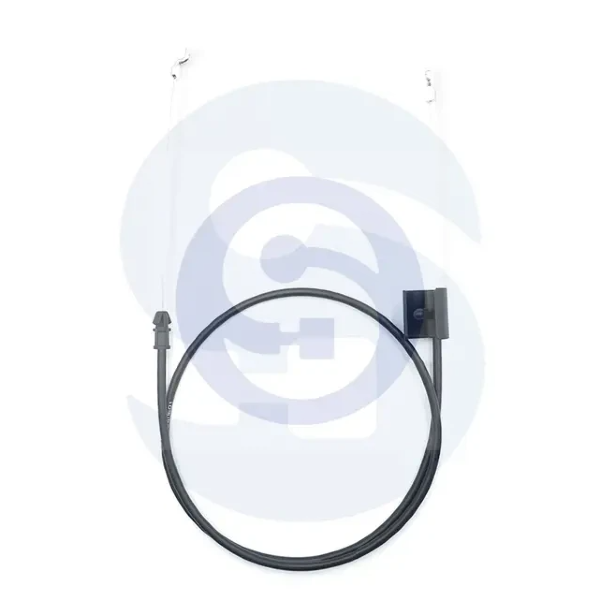
Throttle cable problems rarely begin with total failure. More often, they start with small changes in feel. Those early changes are easy to ignore, but they usually tell the user that wear or contamination has already started.
One common symptom is sticking. The throttle may feel rough, resist movement, or return more slowly than before. Another issue is excess slack. Too much free play makes the system feel vague, which can lead to delayed response when acceleration is needed.
Uneven engine reaction is also a warning sign. If the machine sometimes responds quickly and sometimes feels lazy, the cable may not be moving freely through the housing. In many cases, these symptoms appear before any visible external damage is obvious.
Visual inspection often reveals more serious issues. Frayed wire strands are a strong sign that replacement should not be postponed. Damage usually begins near cable ends or at points where the cable bends under repeated stress.
Heat is another problem. If the cable route passes too close to hot engine surfaces, the housing can harden, weaken, or lose flexibility. Cracked outer covering is also serious because it allows dirt and moisture to enter the system. Once contamination gets inside, drag and corrosion increase much faster.
Good troubleshooting starts with simple checks. Before removing parts, it is often possible to learn a lot from throttle feel, cable routing, and visible condition.
Begin with movement. Twist the throttle and pay attention to whether the action is smooth from start to finish. Release it and check whether it returns cleanly. Then look at the cable route. Tight bends, pinched sections, or movement changes when the handlebars turn can all affect performance.
Next, inspect the housing and end fittings. Look for worn surfaces, cracked sheathing, rubbing marks, or exposed wire. These details help determine whether the issue is only minor drag or a deeper structural problem.
Lubrication can improve performance when the cable is only dry or lightly contaminated. In those situations, restoring internal smoothness may reduce drag and improve return action. But lubrication is not a real fix for a frayed cable, a damaged housing, or severe corrosion.
That distinction is important for maintenance teams and buyers. Some problems can be serviced. Others require immediate replacement. Treating structural wear like a minor maintenance issue usually leads to repeat problems and more downtime later.
A throttle cable should be replaced when it can no longer provide smooth, safe, and predictable operation. The question is not whether the machine can still run. The real question is whether the cable can still do its job reliably.
Replacement is the better choice when there is visible fraying, repeated sticking, cracked housing, serious corrosion, or unstable return behavior. Another sign is a cable that keeps causing the same problem even after cleaning or adjustment. In that case, the issue is usually wear rather than temporary contamination.
A worn throttle cable often gives warnings before full failure. Taking those warnings seriously helps prevent sudden loss of performance and reduces the chance of unexpected downtime.
A reliable replacement should match the application in length, fittings, flexibility, and durability. It should also be built for the actual working environment. Motorcycles, outdoor equipment, and utility applications often expose cables to vibration, dust, moisture, and frequent motion, so product quality matters a great deal.
SUMHO CONTROLCABLE focuses on control cable development and manufacturing for automotive, motorcycle, and outdoor equipment use. For throttle applications, durable steel wire rope construction, stable Bowden cable design, and application-based customization help support smooth movement and long service life. For OEM and aftermarket projects, the right replacement is not only about fit. It is about restoring accurate throttle response and dependable control.
A throttle cable may be a small part, but it has a major influence on control feel, operating safety, and long-term reliability. Understanding how it works, recognizing early warning signs, and choosing the right replacement can prevent small problems from becoming expensive ones. For businesses and buyers looking for dependable control cable solutions, SUMHO CONTROLCABLE offers the engineering, production capacity, and application experience needed for real-world performance. Contact us to discuss product details, custom cable requirements, or replacement solutions for your market.
The earliest sign is often a change in feel. The throttle may become sticky, slow to return, or less responsive than before.
No. Lubrication can help with dryness or light contamination, but it will not solve fraying, cracked housing, or severe internal wear.
Dual-cable systems use one cable to open the throttle and another to assist return action. This can provide more controlled movement in certain applications.
They should confirm cable length, end fittings, routing requirements, housing quality, and whether the cable is designed for the actual working environment.
