Tel: +86-18929108896 Email: solomon@sum-ho.com
- All
- Product Name
- Product Keyword
- Product Model
- Product Summary
- Product Description
- Multi Field Search


Views: 0 Author: Site Editor Publish Time: 2025-09-08 Origin: Site


As the global automotive industry accelerates toward electrification, one component often overlooked yet absolutely vital to this transformation is the Automobiles Cables system. Cables are the nervous system of vehicles, transmitting power, signals, and data that make modern mobility possible. While in traditional internal combustion engine (ICE) vehicles, cables primarily connect batteries, starters, ignition systems, and sensors, the rise of electric vehicles (EVs) has dramatically increased both their importance and complexity.
From carrying ultra-high voltages for fast charging to enabling advanced battery management systems, Automobiles Cables are now at the center of safety, efficiency, and performance in the electrification era.
The shift to electrification has significantly raised the bar for Automobiles Cables in terms of design, materials, and performance. Unlike ICE vehicles, EVs require cables capable of handling higher voltages and currents consistently. Let’s examine the key technical requirements:
High Voltage Endurance – EV powertrains operate at voltages ranging from 400V to 800V, with next-generation systems pushing toward 1000V. Automobiles Cables must have reinforced insulation layers that prevent electrical breakdown under these extreme conditions.
Thermal Stability – Electric motors, power electronics, and charging systems generate significant heat. Cable insulation materials such as cross-linked polyethylene (XLPE) and silicone rubber are used to ensure reliable performance across temperatures from -40°C to 150°C.
Flexibility and Weight Reduction – To improve driving range, automakers seek lightweight solutions. Aluminum conductor cables and thin-wall insulation designs help reduce vehicle mass while maintaining current-carrying capacity.
Electromagnetic Compatibility (EMC) – High-voltage Automobiles Cables must minimize electromagnetic interference (EMI) that can disrupt onboard electronics and sensors, especially in autonomous or connected vehicles. Shielding layers and twisted pair designs are essential.
Durability Against Mechanical Stress – EV cables are subject to continuous bending, vibration, and abrasion. Braided shields, reinforced jackets, and advanced polymers extend cable life even under tough operating conditions.
In short, electrification requires Automobiles Cables that are not just conductors of electricity but engineered systems capable of balancing performance, safety, and efficiency.
One of the most transformative aspects of EV adoption is fast-charging technology, and here Automobiles Cables are indispensable.
Fast charging demands cables that can safely carry hundreds of amperes at high voltage without overheating. For example, charging at 350kW with an 800V system requires cables capable of transmitting up to 500A. To achieve this, manufacturers use:
Larger conductor cross-sections to reduce resistance.
Liquid-cooled cables that maintain safe operating temperatures during ultra-fast charging.
Special insulation systems designed to withstand repetitive voltage stress.
Without reliable Automobiles Cables, the fast-charging experience could lead to overheating, insulation breakdown, or even fire hazards. Therefore, cables must be designed to comply with strict international standards such as ISO 6722 and LV 216.
By enabling safe, high-speed charging, Automobiles Cables directly improve convenience for drivers. Shorter charging times translate into wider EV adoption, making cables a critical enabler of the entire EV ecosystem.
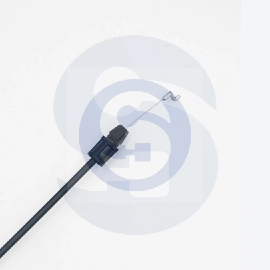
At the heart of every EV is its battery pack, and the efficiency of this pack depends largely on the Battery Management System (BMS). Here, Automobiles Cables ensure precise signal transmission and stable power delivery.
Low-Voltage Signal Cables – These carry information about temperature, voltage, and current from individual battery cells to the BMS controller.
High-Voltage Cables – These connect the BMS to the inverter and other high-power components, requiring insulation to withstand system voltages.
Communication Cables – CAN bus and Ethernet cables enable data exchange between the BMS and vehicle control units.
High Accuracy: Signal cables must minimize resistance to prevent voltage drop errors.
Shielding: To prevent electromagnetic interference from high-power circuits.
Reliability: Since BMS oversees safety-critical functions like thermal management and overcharge protection, cables must remain functional for the battery’s entire lifespan (often 8–10 years).
In summary, Automobiles Cables are integral to maintaining battery safety, efficiency, and durability, making them a key link in EV reliability.
In electric vehicles (EVs), where voltages often reach levels far beyond human safety thresholds, the insulation and protective design of Automobiles Cables become absolutely critical. Unlike conventional low-voltage wiring in fuel-powered cars, EV cables must be engineered to withstand not only higher voltages but also harsher operating environments.
XLPE (Cross-Linked Polyethylene): Known for its excellent thermal resistance and stable electrical integrity, XLPE helps prevent breakdowns even under continuous high-load operation.
Silicone Rubber: Offers superior flexibility and mechanical strength, making it suitable for areas exposed to extreme heat or constant movement.
Fluoropolymers (FEP, PTFE): Provide exceptional chemical and oil resistance, ensuring reliability in the demanding environment of the engine bay or power electronics modules.
Automobiles Cables undergo rigorous testing to meet global safety regulations. These include dielectric strength to prevent dangerous voltage leaks, fire resistance to minimize fire hazards, and abrasion or vibration endurance to secure long-term reliability in real-world driving conditions.
Beyond technical durability, insulation directly safeguards passengers and service technicians. Advanced shielding and grounding ensure that any leakage currents are safely redirected, preventing shocks or system failures.
In short, safety and insulation are not optional add-ons but foundational requirements for reliable EV performance and user confidence in the electrification era.
While both EVs and ICE vehicles depend on Automobiles Cables, the differences in their requirements are striking.
Feature | ICE Vehicle Cables | EV Cables |
Voltage Range | 12–48V | 400–1000V |
Current Capacity | Low to medium | Very high (fast charging, motor drive) |
Heat Resistance | Moderate | High (up to 150°C) |
Insulation | Basic PVC, PE | Advanced XLPE, silicone, fluoropolymers |
Weight Optimization | Less critical | Highly important for range efficiency |
Safety Standards | Focus on durability | Stringent electrical + fire safety |
Applications | Starter, ignition, sensors | Powertrain, BMS, charging, communication |
This comparison highlights that EV cables are far more advanced, serving as high-performance components rather than simple conductors. Automobiles Cables in EVs not only power the drivetrain but also integrate data communication, thermal management, and safety systems.
Automobiles Cables have transformed from hidden background parts into essential enablers of modern electrified mobility. In today’s EV era, they power propulsion with high-voltage delivery, support ultra-fast charging, ensure precise battery management, and safeguard passengers with advanced insulation. Their lightweight, flexible designs also contribute directly to improved vehicle range and efficiency.
As the demand for electric vehicles continues to grow, the need for reliable, durable, and innovative cable solutions has never been greater. Automobiles Cables are no longer simple conductors—they are lifelines that connect every critical system of a vehicle while advancing the global shift toward cleaner and more sustainable transportation.
For businesses and manufacturers seeking cutting-edge solutions in this field, Dong Guan SumHo Control Cable Co., Ltd. stands out as a trusted partner. With expertise in designing and producing high-performance cables tailored for both conventional and electric vehicles, the company provides products that meet the highest standards of safety, efficiency, and durability.
If you are looking to stay ahead in the electric mobility revolution, we recommend exploring Dong Guan SumHo Control Cable Co., Ltd. to learn more or connect directly for tailored solutions.
