Tel: +86-18929108896 Email: solomon@sum-ho.com
- All
- Product Name
- Product Keyword
- Product Model
- Product Summary
- Product Description
- Multi Field Search


Views: 0 Author: Site Editor Publish Time: 2026-07-08 Origin: Site


A lever that suddenly loses resistance can end a ride in seconds. When a broken motorcycle clutch cable appears, shifting becomes difficult, starts feel awkward, and the problem quickly moves from inconvenience to safety concern. For riders, workshops, and aftermarket buyers, this kind of failure rarely happens without warning. At Dong Guan SumHo Control Cable Co., Ltd., known as SUMHO CONTROLCABLE, motorcycle cable systems are developed for repeated-use applications where durability, smooth operation, and correct routing matter, so understanding why clutch cables fail is the first step toward preventing the next failure.
A clutch cable usually breaks because several smaller problems have been building for some time. The final snap may seem sudden, but the real process is gradual. Rust, drag, poor routing, and excess strain weaken the cable until one section can no longer handle normal use.
Most failures happen near the ends of the cable, where bending and repeated movement are most frequent. Once resistance increases, each pull puts more stress on the same area. If that stress continues without inspection or correction, the cable eventually gives way.
Rust and contamination are among the most common causes of clutch cable failure. Once moisture or dirt enters the housing, internal friction rises. The rider may only notice a heavier pull at first, but inside the cable, the steel strands are already wearing faster.
Corrosion is especially harmful because it weakens the metal while also making the cable harder to move. That means the rider pulls harder at the same time the cable is becoming less capable of handling that force. Motorcycles that sit unused in humid conditions are especially vulnerable because internal damage can progress before the outside shows much change.
That is why cable quality matters in real service conditions. A clutch cable should not only function when new. It should also resist contamination, wear, and long-term environmental stress.
Even a good cable can fail early if the route is wrong. Tight bends, pinch points, rubbing areas, or heat exposure all increase operating stress. Instead of moving smoothly, the inner wire is forced to work against extra resistance every time the lever is pulled.
Poor routing is often overlooked because the rider focuses on the cable itself rather than the path it follows. But if a replacement cable is installed into the same bad route, the next failure may come much sooner than expected. A cable should match the motorcycle not only in fittings and length, but also in the way it can move naturally through the system.
This is one reason application-focused design matters. SUMHO CONTROLCABLE develops motorcycle control cable systems with attention to route flexibility, housing durability, and consistent movement under repeated use.
A clutch cable is only one part of the clutch system. If the lever perch is worn, the pivot is rough, the release mechanism has drag, or free play is set incorrectly, the cable ends up carrying extra load. That additional stress shortens its service life.
This is also why a clutch cable failure should not be treated as an isolated event. If the cable broke, the rider or technician should inspect the surrounding parts as well. Otherwise, the next cable may fail for the same reason.
Cause | Early warning sign | Risk level | Correct fix |
Rust or internal corrosion | Heavier pull, rough lever feel | High | Replace cable and inspect moisture exposure |
Dirt and contamination | Drag, uneven movement | Medium to high | Clean related parts and replace if needed |
Poor routing | Tight feel, extra strain | High | Re-route correctly and replace damaged cable |
Heat or housing damage | Cracks, hardened outer layer | High | Replace cable and correct the path |
Worn lever or perch parts | Rough or uneven pull | Medium | Inspect and service related hardware |
Incorrect adjustment | Strange friction zone, harder pull over time | Medium | Reset adjustment and inspect the full system |
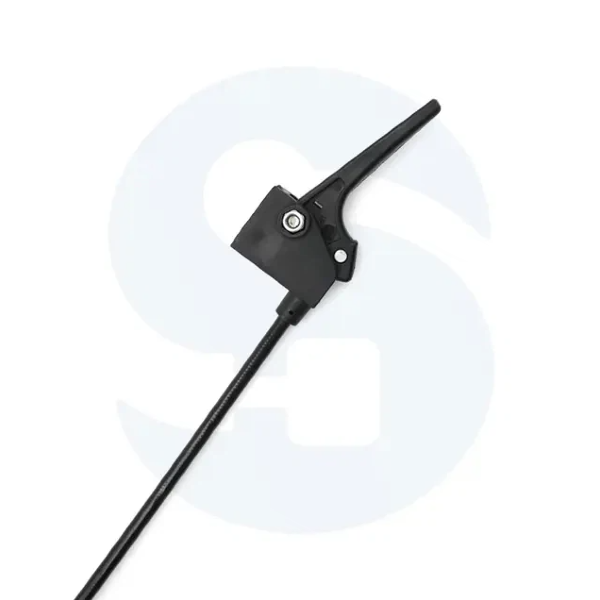
Most clutch cables show warning signs before they fail completely. Riders often continue using the motorcycle because the cable still works, but that usually gives the damage more time to grow.
A heavier lever is one of the first signs. If the clutch suddenly feels harder to pull, the cable should be checked. Roughness or inconsistency in lever movement is another clue. Instead of a smooth pull, the lever may feel scratchy, sticky, or uneven.
Fraying near the cable ends is one of the clearest visual warnings. Even slight fraying should be taken seriously because the remaining strands are then forced to carry more load. Inconsistent clutch engagement is another useful sign. If the friction zone feels unstable or the bike shifts less cleanly than before, the cable may no longer be moving evenly inside the housing.
Visible housing damage also matters. Cracks, flattening, or worn outer sections often mean the cable has already been working under poor conditions. The safest time to act is before the cable becomes an emergency.
Once the cable has actually broken, safety comes first. If clutch control is lost, the bike should not be treated as if it only has a minor inconvenience. In most cases, it is better to stop and inspect the situation rather than keep riding.
Check where the cable failed. The break often happens near one end, and the condition of that area can reveal useful clues. A rusty break, a frayed end, or a sharply bent section each points to a different cause. This matters because replacing the cable without understanding the cause can lead to the same failure again.
It is also important to inspect the route, lever perch, and release mechanism instead of replacing the cable alone. A snapped cable is often a symptom of a larger service issue, not just a single damaged part.
A real fix starts with full replacement. Once a cable has snapped, frayed badly, or become heavily corroded, repair is no longer the right answer. But replacement should be done correctly, not just quickly.
The new cable should match the application in length, fittings, and routing needs. Before installation, the full cable path should be checked for tight bends, rubbing points, and heat exposure. The lever perch and release components should also be inspected, because worn related parts can make a new cable feel poor from the start.
Lubrication can help if the rest of the system is in good condition, but it should support a sound setup rather than hide deeper problems. The aim is not only to restore function, but also to restore smooth and dependable operation.
This is where replacement quality becomes important. SUMHO CONTROLCABLE manufactures control cable products for motorcycle and industrial applications where stable construction, durable materials, and consistent movement support long-term performance rather than short-term repair only.
Prevention starts with regular inspection. Riders should check lever feel, cable ends, housing condition, and routing during routine service. Small changes are often the first signal that the cable is under increasing stress.
Storage conditions also matter. Motorcycles left unused in humid or dirty environments should be checked carefully before normal riding resumes. Moisture and contamination can begin causing damage long before the cable actually fails.
Correct routing should always be confirmed after replacement or major service. The cable should move freely across the full steering range without tightening, rubbing, or binding. Proper clutch adjustment also helps because a badly adjusted cable may be forced to work harder than necessary.
Finally, prevention depends on replacement quality. A cable that only fits is not always enough. Better materials, smoother internal movement, and more durable housing construction all help reduce repeat failures in real-world use.
A broken motorcycle clutch cable is usually not simple bad luck. It is often the result of corrosion, poor routing, excess load, or warning signs that were missed until the cable finally failed. The best solution is not only replacing the damaged part, but also correcting the cause and choosing a durable motorcycle clutch cable built for stable long-term operation. SUMHO CONTROLCABLE supports these needs through ongoing cable system development and manufacturing for motorcycle control applications where smooth movement, fit accuracy, and durability matter. If you are looking for replacement solutions or product support for your market, contact us.
Rust and internal drag are among the most common causes. As corrosion and friction increase, the cable weakens and carries more stress during every pull.
Yes. Common signs include a heavier lever, rough pull, fraying near the ends, unstable engagement, and visible housing damage.
Usually no. Once clutch control is lost, the safer choice is to stop, inspect the failure, and repair the system properly.
Use regular inspection, correct routing, proper adjustment, clean operating conditions, and a durable replacement cable suited to the motorcycle.
