Tel: +86-18929108896 Email: solomon@sum-ho.com
- All
- Product Name
- Product Keyword
- Product Model
- Product Summary
- Product Description
- Multi Field Search


Views: 0 Author: Site Editor Publish Time: 2026-06-24 Origin: Site


The best motorcycle clutch cables are not simply the most expensive ones. The best cable is the one that matches the bike correctly, fits the route naturally, delivers a smooth pull, and stays reliable under real riding conditions. A cable that looks premium but installs poorly or wears too quickly is not the best choice for any rider. At Dong Guan SumHo Control Cable Co., Ltd., known as SUMHO CONTROLCABLE, this practical view matters because clutch cable performance depends on fit, construction, and use conditions, not on marketing language alone.
The word best only matters when it describes real performance. Riders are not buying a clutch cable for appearance alone. They want smoother clutch feel, easier installation, and dependable long-term use. That means the best cable is not always the most specialized one. It is the one that fits the motorcycle, matches the rider’s use, and delivers stable control over time.
A clutch cable works as part of the full control system. If the fit is wrong, the cable will not feel right. If the internal movement is rough, the lever will not stay consistent. If the construction is weak, the service life will disappoint even when installation is correct.
Fit comes first because a cable that does not match the motorcycle properly cannot perform well enough for any other feature to matter. Length, end fittings, and routing compatibility determine whether the cable moves naturally or works under constant strain. A cable that is too short may create tension or tight bends. One that is too long may create awkward routing or extra slack.
That is why OEM-style replacement cables remain popular. Riders want a part that installs predictably and behaves like it belongs on the motorcycle from the start. If the bike has modified bars, altered routing, or non-standard controls, then a custom clutch cable may actually be the better choice because it matches the motorcycle as it is now.
Once fit is correct, buyers care most about how the cable feels in use. A smooth pull reduces hand fatigue, makes the friction zone easier to control, and keeps clutch behavior more predictable in traffic and low-speed riding. A rough or inconsistent cable makes the whole bike feel less refined.
Durability matters just as much. A good cable should keep its feel over time, not just work well for a short period after installation. Buyers should therefore pay attention to housing quality, inner-wire construction, liner smoothness, and overall movement consistency. Stable feel is what brings these qualities together. A good cable should not feel heavy one week and loose the next.
Cable type | Best for | Key strength | Possible trade-off |
OEM-style replacement cable | Standard motorcycles and stock setups | Direct fit and predictable installation | Less flexibility for modified bikes |
Heavy-duty clutch cable | Frequent use and tougher riding conditions | Better durability and long-term stability | Usually costs more than a basic cable |
Braided clutch cable | Riders wanting stronger outer protection or custom style | Improved protection and upgraded appearance | Not necessary for every stock application |
Custom clutch cable | Modified bikes and special routing needs | Correct length and fit for non-standard setups | Requires accurate specification |
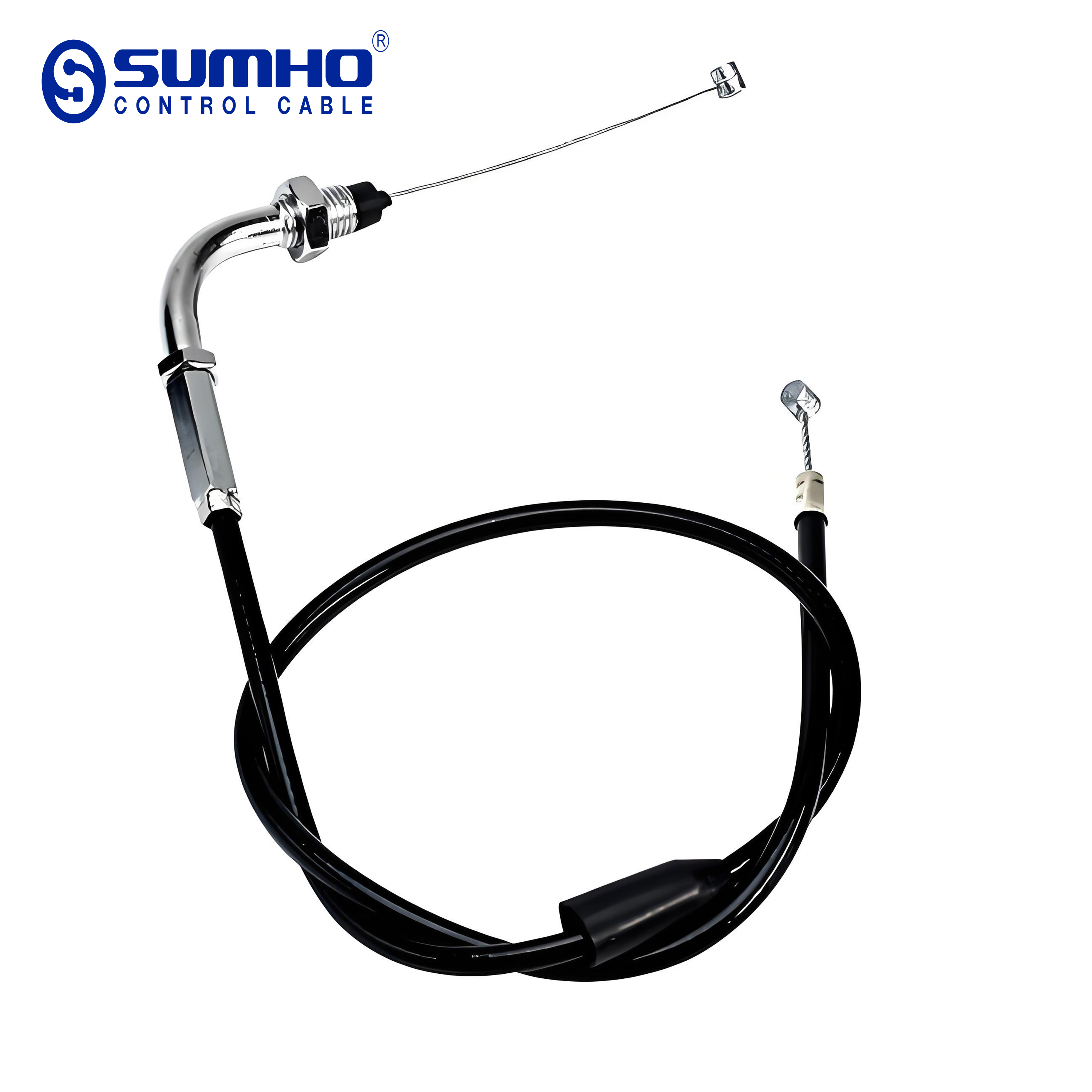
The right style depends on the motorcycle and the way it is used. A commuter bike, a touring bike, and a custom build may all need something different. The best way to compare cables is to think about installation, riding conditions, and whether the motorcycle still follows a stock layout.
OEM-style replacement cables are ideal for riders who want the most predictable fit and installation. If the motorcycle remains close to original specification and the goal is to restore normal clutch function, this option often makes the most sense. It reduces guesswork and usually works well for standard road bikes, routine maintenance, and normal aftermarket replacement needs.
Other situations call for something more specialized. Heavy-duty cables suit motorcycles used in traffic, under harder riding conditions, or in environments that create more wear. Braided options often appeal to riders who want stronger outer protection or a different visual finish. Custom-length cables are especially useful when handlebar height, control position, or cable routing no longer matches stock dimensions.
A good buying decision starts before installation. Buyers should treat clutch cable selection as a fit-and-use decision rather than as a simple part-number purchase.
The first thing to check is compatibility with the actual motorcycle setup. That includes model fit, cable length, end fittings, and whether the bike still uses its original route and handlebar geometry. A cable that fits the listed model may still be wrong if the motorcycle has been modified.
Routing matters because poor routing makes even a good cable feel bad. If the path involves tighter bends or altered control positions, that should be considered before ordering.
The second thing to check is how the bike is used. Daily traffic riding places different demands on a cable than occasional weekend riding. Touring adds long hours of operation. Dust, moisture, and repeated clutch use increase wear and make smooth pull quality more important.
That is why the best motorcycle clutch cables should be judged by use conditions. A standard replacement may be enough for light use on a stock bike. A more durable or custom-oriented option may be a better match for heavier use or modified motorcycles.
Manufacturing quality matters because small differences in materials, liner smoothness, end-fitting accuracy, and housing construction all show up at the lever. Buyers may not see those differences immediately in product photos, but they feel them after installation.
A smoother internal path reduces drag. Better housing stability helps the cable keep its feel longer. More accurate fittings reduce seating problems and installation stress. Stronger construction helps the cable resist repeated wear in daily use.
For quality-focused buyers and distributors, this is where real product differentiation begins. The best supplier is not the one making the loudest claim. It is the one able to deliver stable dimensions, consistent batches, and dependable performance over time.
A useful article on the best motorcycle clutch cables should recognize that different buyers want different things. Some need direct replacement. Some need custom routing support. Others care most about durability in demanding environments.
SUMHO CONTROLCABLE fits this conversation as a manufacturer focused on mechanical control cable systems for motorcycles, automobiles, and outdoor equipment. Its product positioning emphasizes clutch, throttle, and brake cables built with durable Bowden cable structures and steel wire rope materials for smooth operation and wear resistance.
That matters for both OEM-related and aftermarket needs. Buyers looking for replacement products want stable performance, fit accuracy, and consistent operation. Buyers with more specialized requirements want flexibility in design and application support.
SumHo’s positioning focuses on durability, smooth operation, customization capability, and manufacturing support. These priorities match what serious buyers actually care about when comparing clutch cable options: proper fit, consistent movement, service life, and application suitability.
This makes the buying conversation more practical. Instead of claiming one product is universally the best, it focuses on building cable solutions that match real operating needs. For inquiry generation, that is more convincing than exaggerated ranking language.
The phrase best motorcycle clutch cables only matters when it means the best match, not the loudest claim. The right choice depends on fit, route, riding conditions, expected durability, and whether the motorcycle needs a standard replacement or something more specialized. A dependable replacement motorcycle clutch cable should give smooth pull, stable feel, and service life that suits real use, while a custom or heavy-duty option may be better for modified or demanding applications. SUMHO CONTROLCABLE supports these priorities through the development and manufacturing of control cable products built around smooth operation, durable construction, and application-based flexibility. If you are evaluating cable options for your market, contact us.
The best choice is the cable that matches the motorcycle correctly, fits the route properly, and gives smooth, stable clutch feel in the way the bike is actually used.
Not always. OEM-style cables are often best for stock motorcycles, while braided or custom cables may be better for modified bikes, special routing, or tougher service conditions.
Check model compatibility, cable length, end fittings, routing needs, and how the motorcycle is used in daily riding. Those details matter more than appearance alone.
Because small differences in materials, housing construction, and fitting accuracy directly affect lever feel, installation ease, durability, and long-term consistency.
